Day Rate vs Fixed Price vs Quoted

Three ways to price a trade job, each with its own upside and its own risk. Here's how to pick the right one - and how to know afterwards whether it made you money.

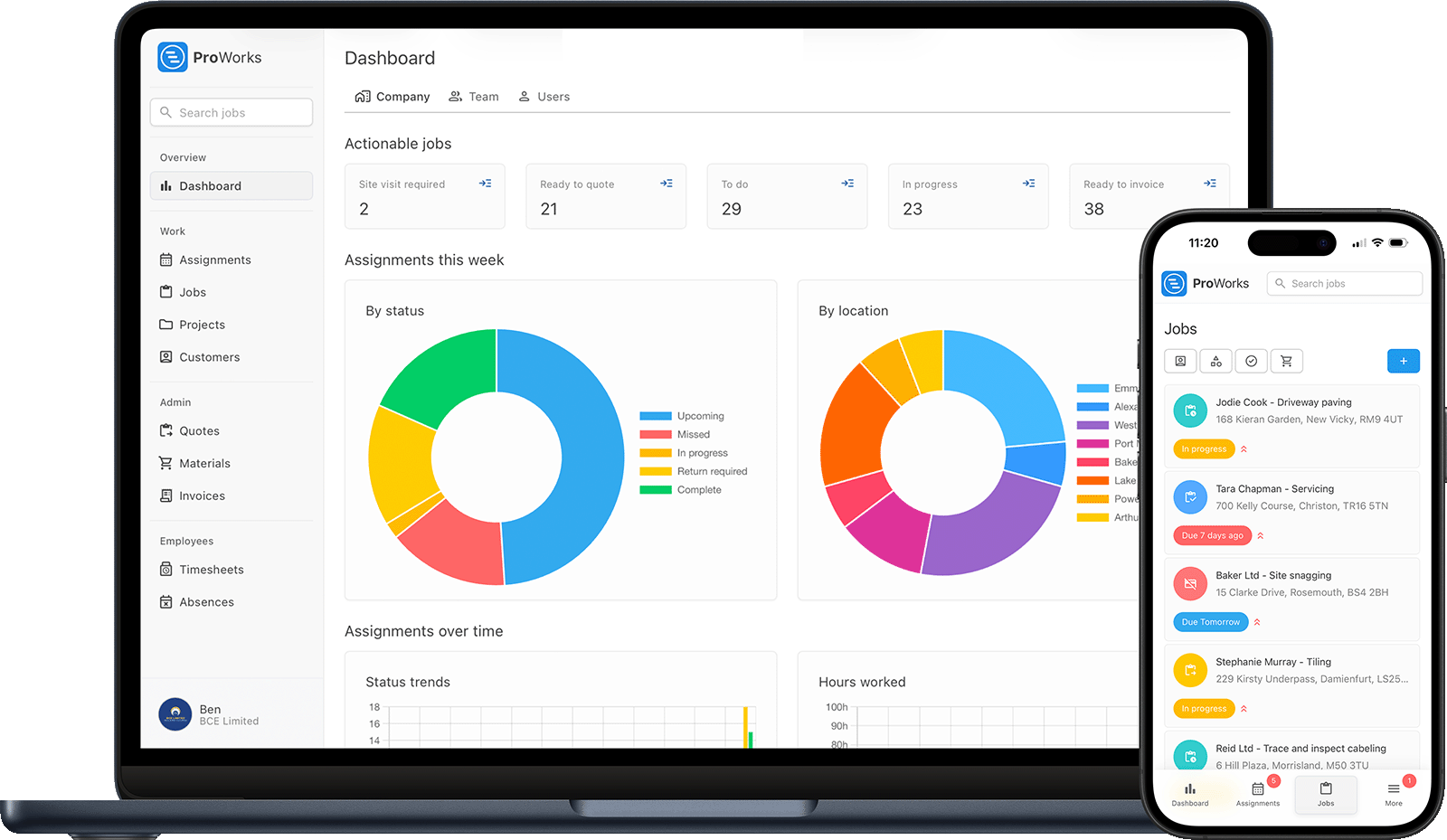
Pricing trade jobs in ProWorks on laptop and mobile

The Three Ways to Price a Job

Most trade work is priced one of three ways. The right choice comes down to how well you can predict the job.

Day Rate

You charge for the time you spend, at an agreed daily or hourly rate.

Best for: uncertain scope - repairs, snagging, work you can't fully see up front.

Watch out for: customers wanting a cap, and needing accurate time records to justify the bill.

Fixed Price

One agreed price for the whole job, whatever the hours end up being.

Best for: well-defined jobs you've done many times and can cost confidently.

Watch out for: the risk sits with you - underprice it or hit surprises and you absorb the difference.

Quoted Price

A priced quote built from labour and materials, sent for the customer to accept before you start.

Best for: larger or bespoke jobs the customer wants to approve up front.

Watch out for: pricing the quote from real costs, and handling variations if the job changes.

Not sure which fits the job in front of you?

Answer three questions about the job.

Can you see the full scope of the work before you start?

Is it a job you've done many times and can cost confidently?

Does the customer want a priced breakdown to approve before you start?

Answer all three to see a suggestion.

A rule of thumb, not a rule - you know your jobs and your customers best.

Quote or estimate? Be clear which

These get used loosely on site, but they mean different things to a customer. A quote is a fixed price you agree to do the work for - once it's accepted, you're generally expected to stick to it unless the job itself changes. An estimate is your best guess at the likely cost, which can move as the work becomes clearer.

Saying which one you're giving, in writing, heads off most pricing disputes. Citizens Advice has plain-English consumer guidance on quotes and estimates if you want the detail.

How ProWorks Helps You Price - and Check

Pick the pricing that fits each job, then find out whether it actually worked.

Set the job type per job

Mark each job as day rate, fixed price or quoted price - plus call-out work - and ProWorks handles the billing to match.

Build quotes from real rates

Quote from your saved rates and standard jobs, so a quoted price is grounded in real numbers, not a finger in the air.

Track time on day rate work

Log hours against the job so a day rate bill is backed by clear records the customer can see.

See profit on fixed-price jobs

With labour and materials tracked, you can see costs against the fixed price and tell whether the job made money.

Send quotes for approval

Send a quote through the customer portal where they can view and accept it, so the price is agreed before you start.

Price the next one better

When you know what similar jobs really cost, your next quote or fixed price is sharper - and more profitable.
Pricing Trade Jobs: Common Questions

Should I charge a day rate or a fixed price?

It depends on how predictable the work is. A day rate suits jobs where the scope is uncertain - repairs, snagging, work behind walls you can't fully see - because you're paid for the time you put in. A fixed price suits well-defined jobs you've done many times, where you can price the whole thing up front and the customer knows the total. The more confident you are about exactly what the job involves, the more a fixed or quoted price works in your favour.

What's the difference between a quote and an estimate?

A quote is a fixed price you agree to do the work for - once the customer accepts it, you're generally expected to stick to it unless the job itself changes. An estimate is your best guess at the likely cost, which can go up or down as the work becomes clearer. Being clear about which one you're giving avoids disputes later. Citizens Advice has consumer guidance on quotes and estimates worth checking.

How do I know if a fixed-price job made a profit?

You compare what you charged against what the job actually cost you in labour and materials. That only works if you track costs as the job runs, not just at the end. In ProWorks, logging hours and materials against the job shows your real costs against the price, so you can see whether a fixed-price job made money - and price the next one like it more accurately.

Can ProWorks handle different pricing types?

Yes. You set the job type on each job - day rate, fixed price or quoted price - and ProWorks handles the billing to match, alongside call-out work. Whichever way you price, it tracks labour and materials against the job so you can see the profit and quote future work from real numbers rather than guesswork.

Related Guides

Price Every Job the Right Way

Set the job type, quote from real rates and see the profit afterwards. Try ProWorks free for 30 days, no credit card required.

This page is general business guidance, not legal or financial advice. For your rights and obligations on quotes and estimates, see the consumer guidance on Citizens Advice.